Tuesday, April 21, 2009

Trip Report: Teresa in 'Laid Back Carriacou'

I had heard that the island of Carriacou was how Grenada used to be 50 years ago. So liking nothing better than to explore a small island and try and get to know something of the culture, we jumped on the local ferry. With a few days spare we hoped to get a flavour of what Carriacou had to offer.

It was late and dark but on the wharf was Claudia from Silver Diving to meet us. A quick supper, compliments of Max, and off we went to stay at Ade’s Dream. Ade’s Dream is a simple, small hotel. Our room was perfectly acceptable with air-conditioning, ensuite bathroom with a hot water shower and everything spotlessly clean. We didn’t need anything more. Breakfast was to be served across the road in a small café. When we woke up we realised we were in the centre of town with views across the roof tops to the sea.

I say the centre of town but this is only a couple of streets stretching a few hundred metres along the waterfront. There was time later to explore as we were to meet Silver Diving at their dive centre a few steps from our hotel. Set in a garden atmosphere next to their house the PADI 5-star Gold Palm IDC centre has everything you need. Claudia and Max have been on Carriacou for an age and told us that the diving was as pristine as it was 20 years ago.

We crossed the deserted road, on to the beach and there was the boat ready and waiting. Carriacou being ringed by reefs means that most of the dive sites are only a short 10 to 20 minute ride away. There are advanced wall dives for the more experienced diver but plenty of sheltered reefs for the novice. The soft coral reefs were healthy and full life. Carrriacou's twin tugs of Boris and WestSider, sunk in 2004 and 2007 respectively, provide new options for experienced divers and are already attracting strong coral growth and marine life.

Back for lunch and a choice of cafes with views of the harbour were easy to find. Offering basic local food we settled on fish and chips with a beach front seat. It was then time to explore the island. We headed up the hillside to take in the beautiful views across to Petite Martinique, which lies just east of Carriacou. Then back to the beach to relax and unwind or as the locals say “to lyme”.

Unfortunately already Carriacou had seeped under our skin and it was with regret we boarded the ferry back to Grenada. For those wanting to explore pristine Caribbean diving and a slow pace of life then Carriacou is the perfect gateway and makes an easy addition to a stay on Grenada.

Now that Claudia and Max have opened their new café we will have to return and sample once more the delights of Max’s kitchen.

Wednesday, March 18, 2009

Trip Report: Helen in Fiji - March 2009

My trip to Fiji had been long awaited and I’d had plenty of time to think about my previous visit and if it was still how I remembered it. I visited Fiji, the Soft Coral Capital of the World, nearly 8 years ago, taking parting in marine conservation project, counting fish and learning to dive. Since then, I have dived all over the world and still Fiji has always been one of the best, if not the best destinations. Admittedly the area I dived was un-dived as no tourist could visit, but I did also experience shark diving in Beqa.

Whilst the flight was long, via Los Angeles the lack of jet lag on arrival is ideal, just tiredness from a poor night’s sleep. I headed over to Castaway Island Resort which was an ideal spot to catch up on some sleep. Just 2 hours boat ride from the mainland, its ideal for those travelling with families or couples who would like a bit more to do. The food was good and the staff were so friendly, something that resonates throughout Fiji. The diving was easy with little current but great visibility and plenty of fish and corals.

I headed back to Nadi and spent the night at the Tanoa International Hotel, a good, clean hotel, ideal for stopovers in Nadi, located just 5 minutes from the airport (domestic and international).

Flying over Viti Levu and Vanua Levu to Labasa was an enjoyable experience. I was reminded how hilly the mainland is and very green!I arrived at Nukubati Island after a one hour transfer by road in a huge rainstorm, soaked right through! The welcome was warm and I was immediately handed coconut juice, something I came to love! This island is one of the most remote I have ever visited! Its located off the north of Vanua Levu, right off the tourist track. If you can’t relax here, you can’t relax anywhere! It was very peaceful and with only 7 bures (4 beachside Bures and 3 deluxe honeymoon bures), you can almost have the place to yourself! The food was delicious and you can even visit your own private sand bank with picnic and champagne!

Nukubati Island is located just 30 minutes from the Great Sea Reef, the third largest reef in the world. There was a great variety from turtles, white tip reef sharks and rays to napoleon wrasses and moray eels. Many of the sites have rarely been dived and some have ten year protection zones in place.

We were then invited on the Tui Tai for the day, a beautiful yacht which sails between Vanua Levu and Taveuni. Whilst we took an unusual route, the normal itinerary is ideally suited so those who would like a balance of diving and other activities or those divers who are travelling with non diving partners. The wall diving in this area was fabulous, although as is often the case, there proved to be no moray eels on the dive site of the same name!
After a fabulous day on board, we arrived to Taveuni in the dark and we were driven to Paradise Island Resort, along an extremely bumpy road which only a 4WD vehicle can manage. How our Japanese friends fell asleep on this ride I will never now! We were given a warm welcome, a foot massage and a delicious dinner but I didn’t have any appreciation for my surroundings in the dark. What a view when I woke up! Taveuni newest boutique resort was only finished in the summer and it was stunning! Located in the south of the island, its ocean front location is breathtaking. The dive centre is a Pro Dive outfit which speaks for itself. Whilst they do offer diving at the well known Rainbow Reef, they tend to focus their diving at their local reefs, namely Vanu Reef. Its one of the only hotels located on Taveuni which has a house reef and we whiled away an hour easily here before realising that our transfer to the next hotel would be waiting for us!

We made our way north to Garden Island Resort, a great budget choice with a lively atmosphere. The resort is located on the ocean and all rooms have ocean views. The onsite dive is AquaTrek and they took us to some excellent dive sites. The slopping walls and visibility were excellent. I had a long encounter with a napoleon wrasse and saw many blue ribbons eels & lion fish.

We were then taken to Maravu Plantation Resort, a lovely property located in well kept and extensive gardens. They have many room types to choose from depending on your budget. All of the rooms have outdoor showers but not all of them have indoor showers! It’s not a beachfront property but the beach is just a stone’s throw across the road. The dive centre, Jewel Divers is located off site, just 5 minutes from the resort. The airport is just 5 minutes drive away

We made a short visit to the Qamea which is a luxurious resort, located an island to the northeast side of Taveuni. This resort is ideal for those celebrating a special occasion. The rooms are beautiful with attention to details throughout. Whilst it takes a little longer to get here (30 minutes by road and then 10 minutes by boat) it is well worth the journey. Our visit here was brief and I wish we’d stayed longer as it is truly a stunning location on its own island with a beautiful house reef surrounding it.

We flew onwards to Kadavu, another of Fiji’s hidden gems, an island located 45 minutes (by air) south of Viti Levu. As we travelled by road (10 minutes) and by boat (45 minutes) I felt I was moving farther and farther away from the hustle and bustle of everyday life. Matava Eco Resort has been built with the environment in mind. There is no air conditioning or fans. There are solar panels for lighting and hot water in your bure. There is only electricity in the office so if you have cameras to be charged you ask the staff to do this for you. Eating is a communal affair, sharing stories about your day and oil lamps to light your walk back to your room.

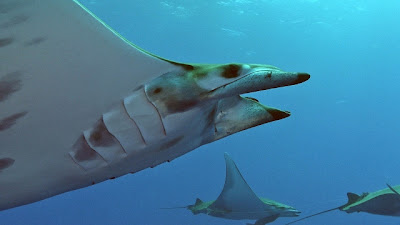
It’s an eco adventure with hiking, kayaking, fishing trips, village visits, waterfalls all on offer. I was there for the diving though! Matava Eco Resort is ideally located to access the Great Astrolabe Reef and it has the best location of all the properties on the island. The diving here can be challenging with plenty of current. But this is what draws in bull rays, grey reef sharks, barracuda and eagle rays. And Manta Rays! They have an 85% hit rate for Manta Rays at Manta Reef and they didn’t disappoint on our two dives! Their beauty and elegance never ceases to amaze me!

From Kadavu we flew back to Nadi. This is now not possible and to access Kadavu you have to fly via Suva. The final part of my trip was spent on the south coast of Viti Levu (the main island) in an area called Pacific Harbour/Beqa Lagoon. I stayed at the Pearl South Pacific Resort, a five star beachfront/oceanview hotel with great facilities, centrally located within Pacific Harbour and the dive centre, Aqua Trek is onsite. The main attraction here is the shark diving. Brendan O’Brian was instigator of this concept. They established a marine reserve in waters surrounding this area. For each diver who takes part in this dive, they pay F$10 to the dive centre which is passed directly to the fisherman who used to fish these waters. This provides them with an alternative to fishing and helps to sustain the waters for diving. And what a dive is was! We did a two-tank dive. On the first dive they chum the waters, emptying green wheelie bins full of dead fish. First to arrive are the travellies, humphead wrasses, black and white tip sharks. Then as surgeon fish, triggerfish, cod and groupers arrive the frenzy begins. Before you know it, your bottom time is up and its time to head for the surface. The surface interval conversation is full of mentions as to whether that elusive tiger shark will make an appearance! So we head down again and by this time, bulls sharks, lemon sharks and silvertips have smelt the food. Nurse sharks arrive too and it’s hard to know which direct to look and then finally the tiger sharks cruises by me, just a few foot away! What a fabulous way to end my adventure in Fiji. My last dive – my first ever tiger shark!

Fiji lived up to my expectations is so many ways and exceed them! The people are still so friendly and warm. The country is very beautiful, both topside and underwater. It is a country that has something for everyone and the same applies to the diving, whether you are looking for relaxing sites or adrenaline pumping action or something in between. And is it worth travelling all that way? Absolutely!

Click here for our diving holidays in Fiji

Wednesday, February 25, 2009

Client Testimonial: Philippines - Mr Baker

"Sangat Island Reserve - we did indeed have an excellent time. The Reserve itself is exceptional - benefitting from a truly outstanding location, it is eco-friendly, provides excellent food, very helpful and friendly staff, and is the nearest and by far the most convenient resort in terms of diving the wrecks of Coron Bay, something not really emphasised in your catalogue (that you might consider revising). A troup of large monkeys visit most mornings which is a bonus if you have a camera handy. Surprisingly (to us) most visitors are probably either French or German speaking with a smattering of Scandinavian countries represented. I really could not fault the reserve in any way, although it would not suit those seeking pure luxury.

From a diving point of view - the wrecks are very impressive despite having being salvaged many years ago, and provided you are a competent diver the dive centre offers guided deep penetrations of the wrecks, or allows you the freedom to plan and execute your own external dives of the wrecks. Alternatively they cater for the less experienced appropriately with shallower reef and smaller wreck dives. The viz is not good however, and there are strong currents, whilst these do not present major problems, it does make a 40m penetration dive (to the kitchens would you believe!) on the Irako Maru far more daunting than a similar 50+m dive on the San Francisco Maru in Chuuk. I would say the diving we did was challenging and very enjoyable as a result, but not suited to pure holiday divers or those lacking reasonable experience of similar conditions."


Mr Baker, February 2009

Friday, January 30, 2009

Client Testimonial: Paul Jarrett, Truk, January 2009:

"Just a line to say thanks for the great trip to Truk you organized at short notice for us in January. Flights and transfers were all perfect, The Blue Lagoon resort on Chuuk and the dive boat Odyssey both were fantastic. I have dived all over the world on liveaboards’ and can say without a doubt that the crew and dive guides on Odyssey are the best I have ever dived with. Once again many thanks."

Paul Jarrett, Truk, January 2009

Click here for diving holidays in Micronesia

Thursday, January 15, 2009

Staff Report – Teresa in Thailand

I was already in Asia on holiday when Bangkok Airport was closed by a peaceful demonstration, my main decision was do I fly into Thailand at this particular point in time. My mind was buzzing with the options open to me, but what I really wanted to do was to continue with my trip as planned. In my many years of travelling I have always enjoyed Thailand and its friendly people and the worst I could see happening was that I might get delayed in Thailand.

So on the 03rd December I flew into the military airport at Pattaya and was quickly whisked through to my connecting flight to Phuket. I had seen the TV reports, but although crowded the airport was working and there were many planes scheduled to depart. Far from the chaos I had seen expecting.

We were met at Phuket Airport by the staff of Sea Bees Diving and whisked by air-conditioned mini-bus to their centre at Chalong Bay. A PADI 5 Star Dive Centre and a PADI Gold Palm Resort, Sea Bees Diving Academy provides professional dive services, including all levels of PADI Courses, daily dive charters on its own boats and a friendly and experienced staff. With a mixture of flexible snorkelling and dive charters and dive course schedules, we made plans for the next few days of activities. We wanted to see as much as possible but only had a few days to explore.

Staying at the Palm Garden Resort, Phuket was a delight, where nothing was too much trouble. It was easy to see that the Resort had been designed with the diver in mind; there was plenty of space to dry your gear and a pool perfect for learning to dive. Everything we needed for a relaxing stay was to be found right on hand. After a hard day out and about it was far too easy to just take a relaxing swim and enjoy our evening meal by the pool. For a change of scenery it was only a short walk to a number of restaurants, shops and the pier.

All in all we found Phuket had something for everyone with beaches and plenty of shopping. From Chalong Bay there was easy access to the dive sites south of Phuket. For those looking for a quieter more relaxed option head up the coast to Khao Lak. Khao Lak was definitely quieter than Chalong Bay with some beautiful beaches and a more laid back relaxed holiday atmosphere. The Palm Gardens Resort at Khao Lak had the same relaxed atmosphere with pool and dive shop on site. From Khao Lak there is easy access to the stunning Similan Islands or alternatively head inland to the jungle covered mountains and one of three national parks in the area. Khao Lak is a relative newcomer to tourism but there is plenty to do in the way of jungle walks, elephant rides and white water rafting.

Although access to the good snorkelling and diving was a boat ride away, we found it all very relaxing and rewarding. We travelled on the Sea Bees boats, that never seemed crowded or rushed, with plenty of freshly prepared food and time to relax. There was a large kitting up area, fresh water showers and areas to chill out or sunbathe. Service on the boats is personalised by having a low ratio of clients to guide - whether you are diving or snorkelling.

A trip to Thailand is not complete without a few days in bustling Bangkok. Here we found the lack of tourists a bonus, with the normally crowed sites like the Grand Place and Wat Phra Kaeo nearly empty. Everywhere was peaceful and at no point did we see any disturbances. The only disappointment was that soon we had to leave but would I go back? Yes definitely and now is the time to go with Thailand offering especially good value for money.

Wednesday, December 17, 2008

Staff Report - Bridget Seychelles

The Seychelles archipelago consisting of 42 granite and 73 coral islands lies in the Indian Ocean just 4 degrees south of the equator and 1000’s of miles from anywhere. The islands are stunningly beautiful and have more nature reserves and marine national parks than any other country.

The granatic islands which tower to over 900m are covered in lush vegetation and where you will find 100’s of the finest and most beautifully picturesque beaches in the world. Even the busiest of these have few people on them and it is not difficult to find a rocky cove where you will be completely alone on pink tinged sand.

The thing that most surprised me about the Seychelles was the huge amount of activities there are to do there. While perfect for sunbathing, romance and watersports there are also miles of nature trails for walking and discovering. The forests are a haven for nature lovers and birders, being home to many of the world’s rarest bird species. You will also find the symbolic Coco de Mer palm. Extinct elsewhere, the palm is endemic to the islands of Praslin and Curieuse and has the largest leaves and nut in the world. The Seychelles are also home to the giant tortoise, once almost extinct. On Curieuse, a marine park island, there is a giant tortoise breeding scheme in place and home to around 300 of the animals.

As my trip was for only five days it just gave me a small taste of what the Seychelles is about. During the trip we did a three day cruise on the Sea Shell, visiting Praslin, Curieuse and La Digue islands and also stayed one night each on Praslin and Mahe.

Silhouette cruises run four sailing vessels. These cruises are perfect for those wanting a mix of diving and non-diving activities or for divers with non-diving partners as the itineraries cater equally for non divers and divers.

Sea Shell and Sea Pearl were built in the 1920s and are full of old world charm. They both have eight air conditioned cabins, three showers and four toilets. The water is solar heated so not always hot. These vessels are great if you don’t mind not having an ensuite cabin and want a sailing vessel with a bit of character. Our captain and crew were great and the food was simple but good, most meals were fresh fish caught daily. The menu is set but dietary requests will be catered for of course.

Sea Star and Sea Bird are modern sailing vessels with a higher standard of comfort and each has nine ensuite air conditioned cabins as well as two comfortable saloon areas. I viewed the newest of the vessels, Sea Bird and it is really a beautiful boat which I would recommend if you want to cruise in comfort. These modern vessels are much faster and therefore cover longer distances and are used for charters to the outer islands.

The four vessels offer regular seven night cruises through the inner islands with daily activities including beach BBQ’s or picnics, walking, exploring, kayaking and diving. With no dedicated dive liveaboard in the Seychelles this is your best option if you want to explore the islands and do some diving. Typically, on a seven night cruise eight dives will be offered but for groups of divers a customised full diving itinerary can be arranged with around three dives per day. Trips to the remote coral atolls of Aldabra are possible during March and April.

On my trip the first stop was Ans Possession off Praslin where we did a check dive - don’t expect fabulous visibility especially during the whale shark season when the plankton is rich. The visibility averaged 5-15 metres. The dive was pretty with plenty of surgeon fish, jacks, fusiliers, bat fish and loads of peppered morays.

The next day we did an early dive on a granite wall. Depths are all fairly shallow in this region, seldom deeper than 14 metres so good for inexperienced divers. We spotted two large stingrays and several octopus along with the usual array of reef fish such as sergeant majors, burrfish, surgeon and parrot fish.

After breakfast we went ashore on to Curieuse Island which until recent years was a leper colony and is now home to 300 giant tortoises which were almost extinct.

There are several walking trails on the island but beware it’s very hot and some of the terrain quite steep but manageable if you take it easy. It’s a lovely walk though and you will get to see the tortoise, some over 100 years old just grazing lazily on the grass. They are very docile and particularly like being stroked along their necks. The boat crew prepared a BBQ lunch and we had plenty of time for some swimming before heading back to the boat for another dive. This time it was a coral garden sloping from 11-14 metres. Here we saw many large tuna, several small reef sharks and numerous morays while the non divers got a lazy afternoon with beach activities or relaxing followed by afternoon tea.

The following morning the boat headed off early for a visit to La Digue Island where time stands still. There are only about 20 vehicles on the island and the mode of transport is either by bicycle which costs 10 euros per day or ox cart. We hired bikes and visited the L’Union estate, an old coconut and vanilla plantation where you can see how coconut oil is pressed in an ox-driven mill. The trail south lead us to one of the Seychelles most beautiful beaches famous for its amazing shaped granite rocks, powder white sand and azure sea - these coves feature in many brochures, movies and advertisements. If you cycle over the east coast which is slightly uphill there are spectacular beaches with huge waves but unsafe for swimming. The island is great for a half or full day trip or if you wish to stay on the island La Digue Island lodge has 69 air conditioned rooms built of wood and thatched with leaves, the lodge also has a pool and dive centre on site. There was an afternoon dive around La Digue which unfortunately I had to miss due to developing a rather nasty cold.

On day three we left the vessel after breakfast while the rest of the guests were heading over to Praslin for walking in the Valle De Mai with its famous Coco de Mer palms.
On Praslin we stayed at the beautiful Paradise Sun hotel which is a four star boutique hotel. Rooms are chalet style and very tastefully decorated. They have air conditioning although I preferred to have the air conditioning off. With the shuttered doors closed and the ceiling fan on it was plenty cool enough. While the group went off for an afternoon dive to Booby Island where they saw sharks, octopus and dolphins I took myself and my cold off to explore the main beach area which had hardly anyone on it. If the Paradise Sun hotel is out of budget there are numerous other accommodation options such as the rustic guesthouse Laurier or three star Acajou hotel. The food at Paradise Sun was as expected - excellent. I opted for the fresh fish of tuna and job fish.

On our last day we took the ferry back to Mahe. The trip takes around one hour and is a good option if you are going to be doing more diving. Alternatively you can take a 15 minute flight.
We stayed in the main Beau Vallon Bay area at the Berjaya hotel but there are many hotels and guest houses on the bay to suit all budgets. I recommend the four plus star Fisherman’s Cove boutique hotel or for more budget conscious the small hotel Augerine which has 15 simple but very tastefully decorated rooms and a small barefoot restaurant. Both are five to ten minutes walk from the Underwater Centre, or pick ups can also be arranged. The dive centre is British-run and well set up to cater for groups and individual divers of all abilities. They have four fully equipped custom-built dive boats and run a full daily diving programme to short and long distance sites. In addition to diving during the whale shark season of September and October the centre runs whale shark snorkelling encounters. The Marine Conservation Society Seychelles (MCSS) was set up in 1997 and is a local non profit organisation focusing purely on marine research and management. The society successfully lobbied the government to declare the whale shark a protected species in 2003.

The whale shark snorkelling trip costs $125 and all income goes into the project which is run by Dr David Sanders and a group of interns. They send up a microlite to spot the sharks and if there are positive sightings the boat leaves in the afternoon.

Unfortunately last year the sightings were very low and this year sees the same trend, although speaking to divers onboard they told me in previous years they have encountered up to 40 sharks in four days.

The day I went out followed my usual luck and we didn’t get to see any whale sharks which is not surprising as only 2 had been spotted earlier that morning by the microlite. However, despite my disappointment I had a really good afternoon snorkelling with a school of 17 Mobula or devil rays which are like small Mantas. I also saw a shark, a turtle and several dolphins so I certainly couldn’t say the afternoon wasn’t enjoyable.

In general the weather in the Seychelles is warm and humid, averaging 29°C throughout the year with more rain around November to end of January. As tropical islands close to the equator, the Seychelles experience quite a lot of rain at all times of the year, but this mostly occurs in brief showers followed again by tropical sunshine, hence the lush green vegetation.
The South East Trade Winds are prevalent from May to September when it will be drier, breezier, and slightly cooler than during the remainder of the year. The North West Trade Winds are prevalent from October to April. This is a much calmer breeze, which results in increased humidity and calmer seas. Higher rainfall occurs during this time of year.The transition periods of April and October tend to be the calmest and hence the best visibility for divers but diving is possible throughout the year.

Air Seychelles operate two direct flights from London each week; out on a Friday or Sunday and returning on Thursday or overnight on Saturday.

In a nut shell if you are looking for a tropical paradise holiday with more to do than just diving then the Seychelles won’t disappoint. There is good diving to be found with the possibility of encountering some large species, but the Seychelles is not just about the diving, the islands have so much more to offer.

Monday, December 15, 2008

Client Testimonial: Belize - December 2008 - A.W.

"The holiday was wonderful. It was everything I'd hoped it would be. The Radisson Fort George hotel at Belize was wonderful - a perfect introduction to the country. Lamanai Outpost is a most special place - lovely people, food, location, experiences. I can't recommend it highly enough. Mata Rocks was also wonderful - out of the town, small and friendly. What a good job Dive Worldwide did. From my first enquiry to the last minute questions everyone was very helpful. Thank you. We had the time of our lives!"

A.W - Belize: December 2008

Click here for diving holidays in Belize